Today we share part 8 of 25, looking back on Pure Premium, our collection of hemp, bamboo and linen denim and leftover fabrics.
Doing things differently doesn't have to mean less. It can mean more.
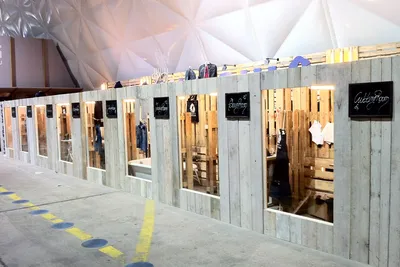
A laboratory on the trade show floor
By 2007, Kuyichi had already built a reputation for organic cotton. But a question kept nagging: what if sustainability wasn't the starting point, but the destination? What if you began with unusual materials and methods, and built a collection around them?
That became Pure Premium. Launched at Bread & Butter in Berlin, then the leading denim and streetwear trade show. Unlike anything Kuyichi had made before. A laboratory. A space to experiment with ideas that hadn't yet found a home.

AW07 campaign shoot

Spare Denim jeans, Pure Premium collection
Fabrics we hadn't seen anywhere else
The collection included hemp denim, bamboo denim and linen denim. Three materials that were rarely used for denim at the time.
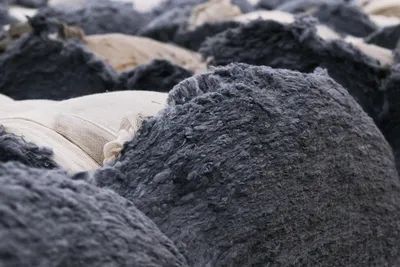
Hemp, bamboo and linen: three fibres that were still rarely used in denim in 2007.Then there was Spare Denim. Leftover fabrics from previous collections that would otherwise have been thrown away or left sitting in storage. Kuyichi turned them into new products. What we called Spare Denim then is now known as deadstock: fabric that was made but never used. The same idea: using what already exists rather than letting it go to waste.

The ‘Born in Japan’ jeans
The most distinctive piece in the collection was the ‘Born in Japan’ jeans. Woven and produced in Japan, with paint splatters applied by a Japanese artist. Anyone who bought them received the jeans in a woven steamer basket, the kind you know from dim sum, but large enough to hold a folded pair of jeans.
No cardboard box, no plastic. Just the jeans, in a basket chosen with the same care as the fabric itself.Pure Premium was a premium collection in every sense. The materials, the production, the packaging. And the questions that came with it: where does this come from, how was it made, and why does that matter?

‘Born in Japan’ jeans, Pure Premium collection

Pure Premium label with the slogan ‘First for Organic’
Transparency woven into the jeans
Every Pure Premium product had a large label on the inside of the waistband. It showed exactly how the jeans were made: the material of the warp and the material of the weft. These are the two yarn directions that form the foundation of a denim fabric.
Via Made-By Track & Trace, the buyer could trace the full journey: from cotton picker to seamstress to designer.The transparency we had embraced a year earlier with the Made-By Blue Button was, with Pure Premium, literally sewn into every product.
What remained
Pure Premium ran for a few seasons. It was never meant to be the heart of the brand, more a space to explore what was possible when materials and production came first.
The collection ended. The ideas didn't. The materials and techniques we tested there found their way back into the rest of our collections. Spare Denim became pre-consumer recycled denim. The search for alternative fibres has remained a constant in how Kuyichi thinks about raw materials.
The laboratory closed. The experiments continued.
Doing things differently doesn't have to mean less. It can mean more.
This was the 8th story in our 25-part series celebrating 25 years of Kuyichi.
Stay tuned for the next chapter of our journey. In the meantime, explore our latest items or revisit our previous chapter.

AW07 campaign shoot
New in


The collection ended.
The ideas didn't.
25 years of Pure Denim Pioneering. Every chapter a choice, every choice a step forward.
25 years of Pure Denim Pioneering